Open clusters are loose groups of stars born together from the same cloud of gas, drifting through the Milky Way as companions for a while longer. Their members are astronomically young and often blazing hot and bluish. Some of these clusters, like the Pleiades, are a jewel even to the naked eye; through a telescope and on the sensor they resolve into dozens or hundreds of sparkling stars. From the Messier and NGC catalogs, the range spans from dense, star-rich clusters to loosely scattered groups. Open clusters are rewarding targets even for beginners: they are bright, work with shorter exposures, and tolerate more moonlight and light pollution than faint nebulae. The real challenge lies in rendering the subtle star colours cleanly without burning out the brightest stars. This page gathers every open cluster I have photographed so far. Click into any object to learn more about it and see all the astrophoto posts it appears in.
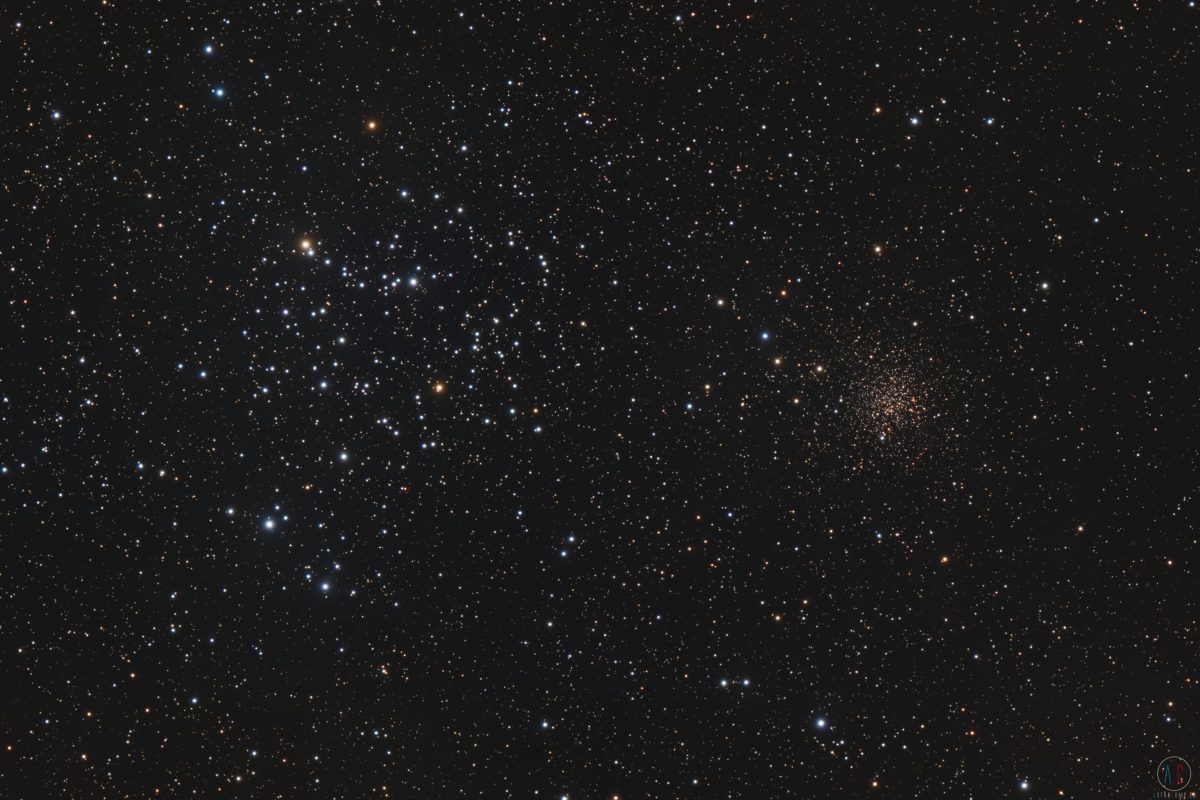
NGC 663 is an open cluster located in the constellation Auriga, approximately 19,386 light-years away from Earth. This stellar object reaches its annual culmination at astronomical midnight at the end of October ...
The Dragonfly Cluster (NGC 457) is a bright open star cluster in the constellation Cassiopeia at a distance of roughly 5,200 lightyears, and it reaches its annual culmination at astronomical midnight and is best observed mid October ...
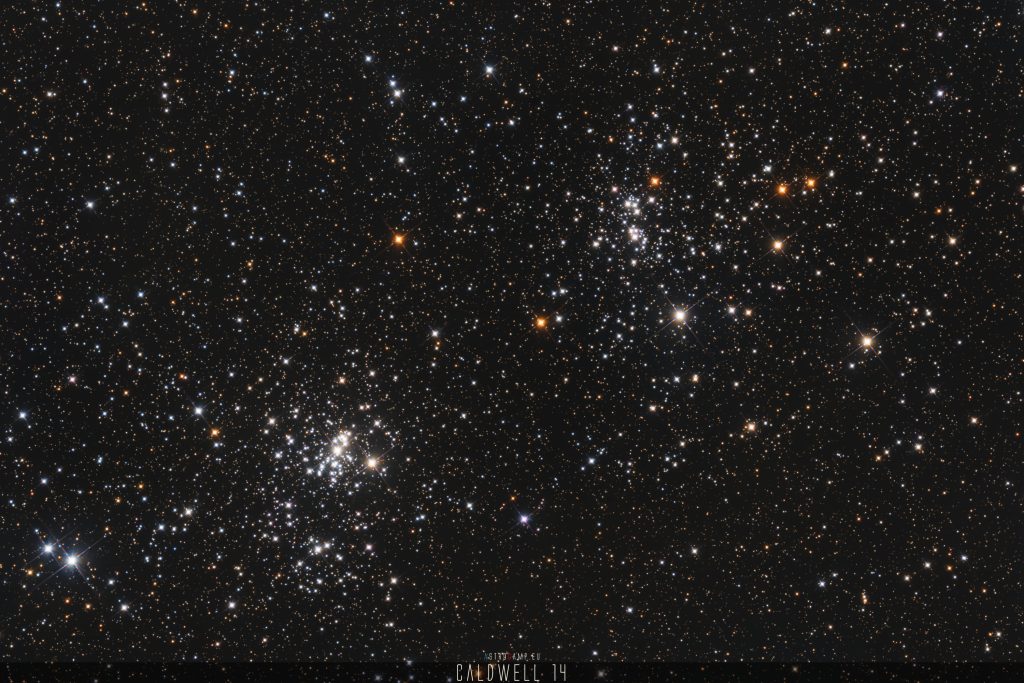
The Double Cluster, also cataloged as Caldwell 14, consists of two open clusters in the constellation Perseus located about 7,500 light-years away and reaches its annual culmination at astronomical midnight and is best observed early November ...
NGC 7243 is an open cluster located in the constellation Lacerta, approximately 2,800 light-years away from Earth. This stellar object reaches its annual culmination at astronomical midnight at the end of August ...
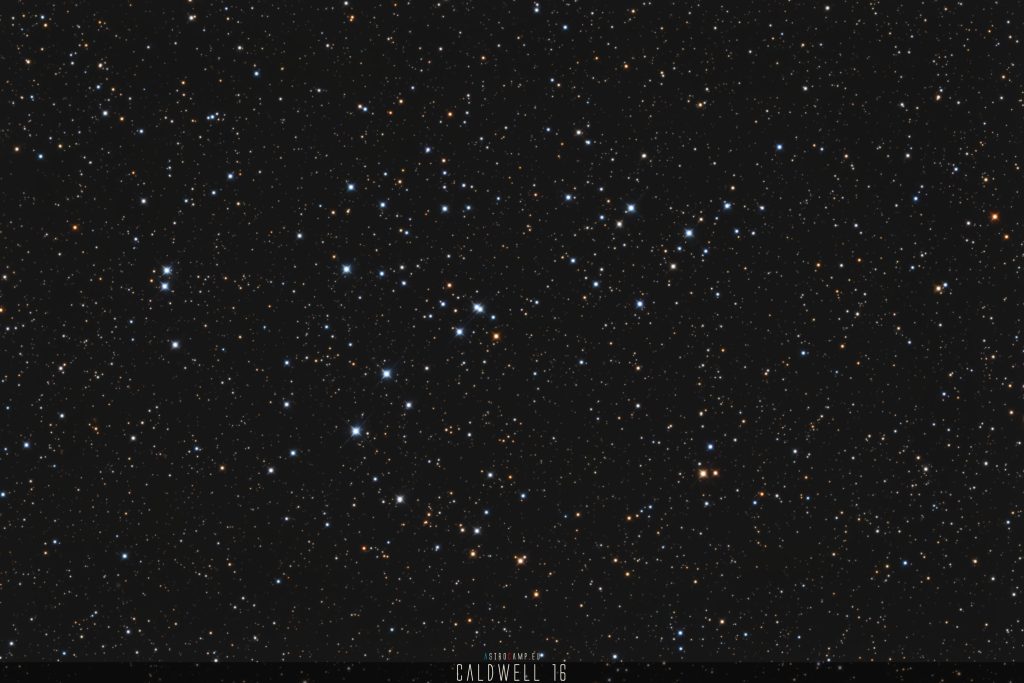
Caldwell 28, also known as NGC 752 and Melotte 12, is an open star cluster located in the constellation Andromeda, about 1,500 light-years away; it reaches its annual culmination at astronomical midnight and is best observed in late October ...
M 29 is an open star cluster in the constellation Cygnus, located about 3,740 light-years away, and reaches its annual culmination at astronomical midnight and is best observed late July ...
The Hyades is the nearest open star cluster to our Solar System, located in the constellation Taurus, approximately 153 light-years away from Earth, reaching its annual culmination at astronomical midnight at the end of November ...
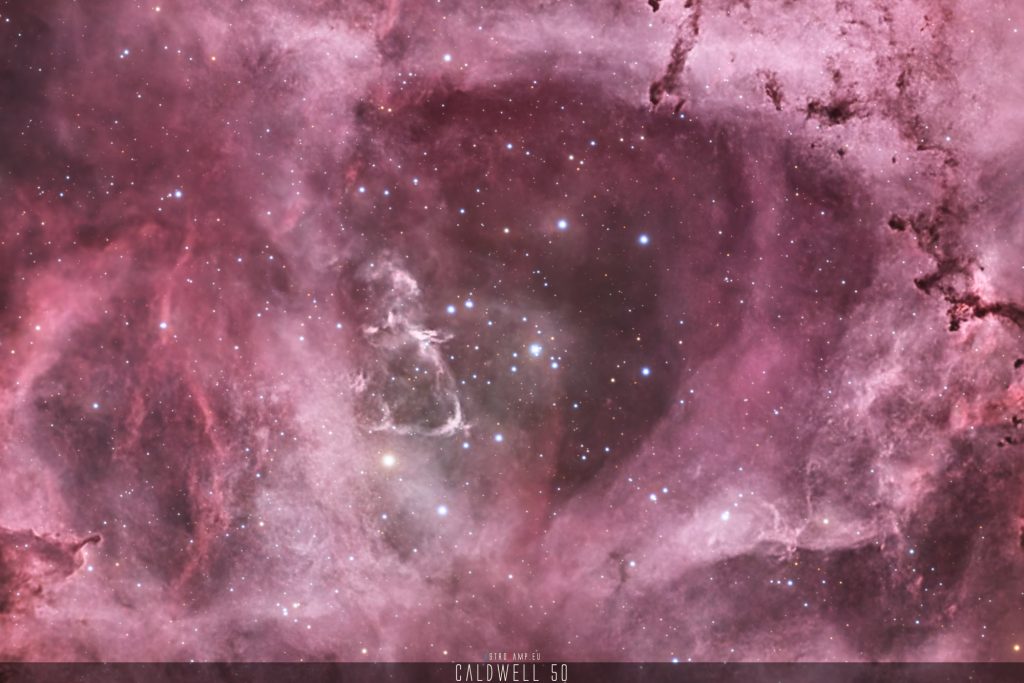
Caldwell 50, also known as NGC 2244, is an open star cluster located within the Rosette Nebula in the constellation Monoceros, approximately 5,219 light-years away from Earth, reaching its annual culmination at astronomical midnight at the end of December ...
The Eagle Nebula is an open cluster in the constellation Serpens, located 5,370 light-years from Earth, and reaches its annual culmination at astronomical midnight and is best observed late June ...
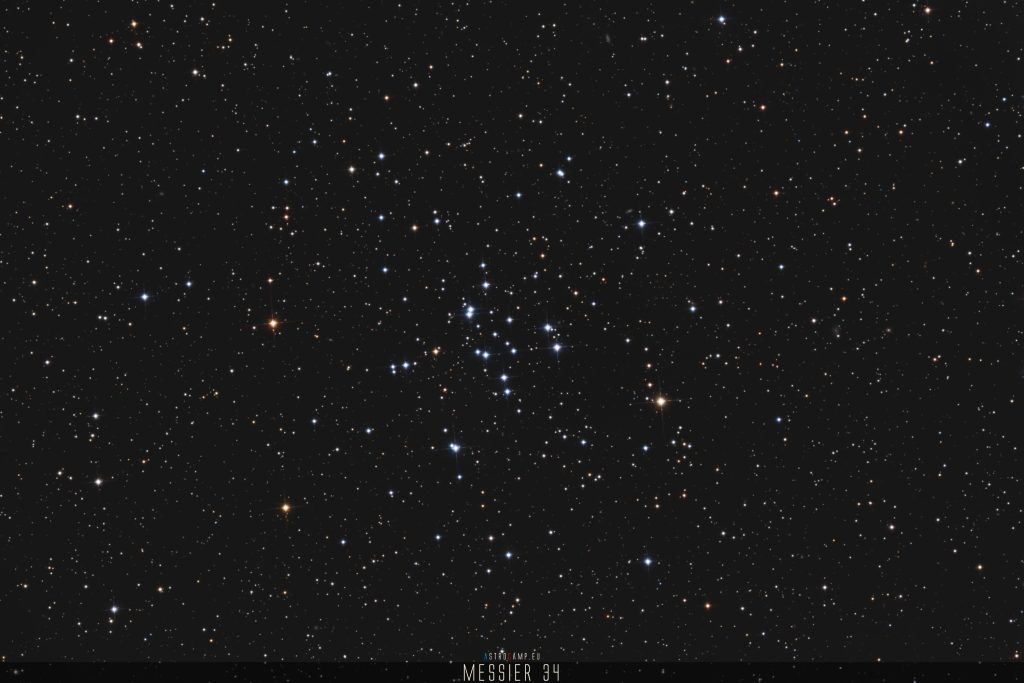
Messier 34 (M34) is an open star cluster located in the constellation Perseus at a distance of approximately 1,500 light-years from Earth. It reaches its annual culmination at astronomical midnight and is best observed in early November ...
Messier 35 is a large open star cluster located in the constellation Gemini, approximately 2,800 light-years away from Earth, reaching its annual culmination at astronomical midnight around end-December ...
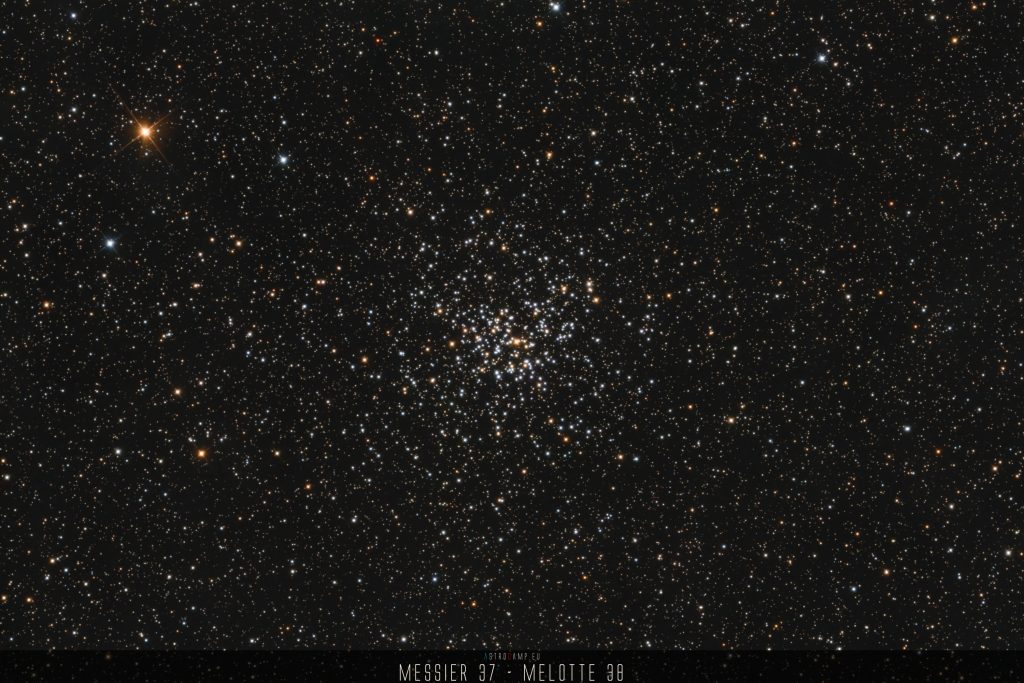
Messier 37 is a bright open star cluster located in the constellation Auriga, approximately 4,511 light-years away from Earth, reaching its annual culmination at astronomical midnight around December 20th ...
Messier 39 is a bright open star cluster located in the constellation Cygnus, about 800 to 1,010 light-years away from Earth, and it reaches its annual culmination at astronomical midnight and is best observed in mid August ...
The Beehive Cluster is a bright open star cluster in the constellation Cancer at a distance of 610 light-years, reaches its annual culmination at astronomical midnight and is best observed late January ...
The Pleiades, also known as the Seven Sisters, is an open star cluster located in the constellation Taurus, approximately 410 light-years from Earth, reaching its annual culmination at astronomical midnight at the end of November ...
M 67 is an open cluster in the constellation Cancer, located 2,960 light-years from Earth, and reaches its annual culmination at astronomical midnight and is best observed early February ...
Messier 103, a young open star cluster located in the constellation Cassiopeia, approximately 8,000 light-years away, encompasses a group of about 40 blue and white stars, reaching its annual culmination around astronomical midnight mid October ...
NGC 2158 is a distant and densely packed open star cluster located in the constellation Gemini, approximately 16,500 light-years away from Earth, reaching its annual culmination at astronomical midnight end of december ...
NGC 2281 is an open star cluster in the constellation Auriga, located about 1,820 light-years away, and reaches its annual culmination at astronomical midnight and is best observed early January ...
NGC 6633 is an open cluster in Ophiuchus located 1,260 light-years from Earth and reaches its annual culmination at astronomical midnight and is best observed late June ...
NGC 6939 is an open cluster in the constellation Cepheus at a distance of about 6,100 light-years, and it reaches its annual culmination at astronomical midnight and is best observed late July ...
NGC 6940 is an open star cluster in the constellation Vulpecula, located about 2,510 light-years away, and reaches its annual culmination at astronomical midnight and is best observed late July ...
NGC 7062 is a compact open star cluster in the constellation Cygnus, located about 4,800 light-years away, reaches its annual culmination at astronomical midnight and is best observed in mid August in the Northern Hemisphere, when Cygnus is high in the sky ...
NGC 7082 is a moderately bright open star cluster located in the constellation Cygnus at a distance of about 4,700 light-years from Earth. This cluster reaches its annual culmination at astronomical midnight and is best observed in mid August ...