vdB 158 is a reflection nebula in the constellation Andromeda, located about 1,380 light-years away, and reaches its annual culmination at astronomical midnight and is best observed mid September.

 Astrocamp – Astrophotography & Deep-Sky Catalog
vdB 158 is a reflection nebula in the constellation Andromeda, located about 1,380 light-years away, and reaches its annual culmination at astronomical midnight and is best observed mid September.

Saturn with the VC200L in infrared (685 nm): one night in October 2026. Location: Koblenz, Rheinland.

My first lucky imaging mosaic. To keep the challenges manageable, I used the Baader Travel Companion.
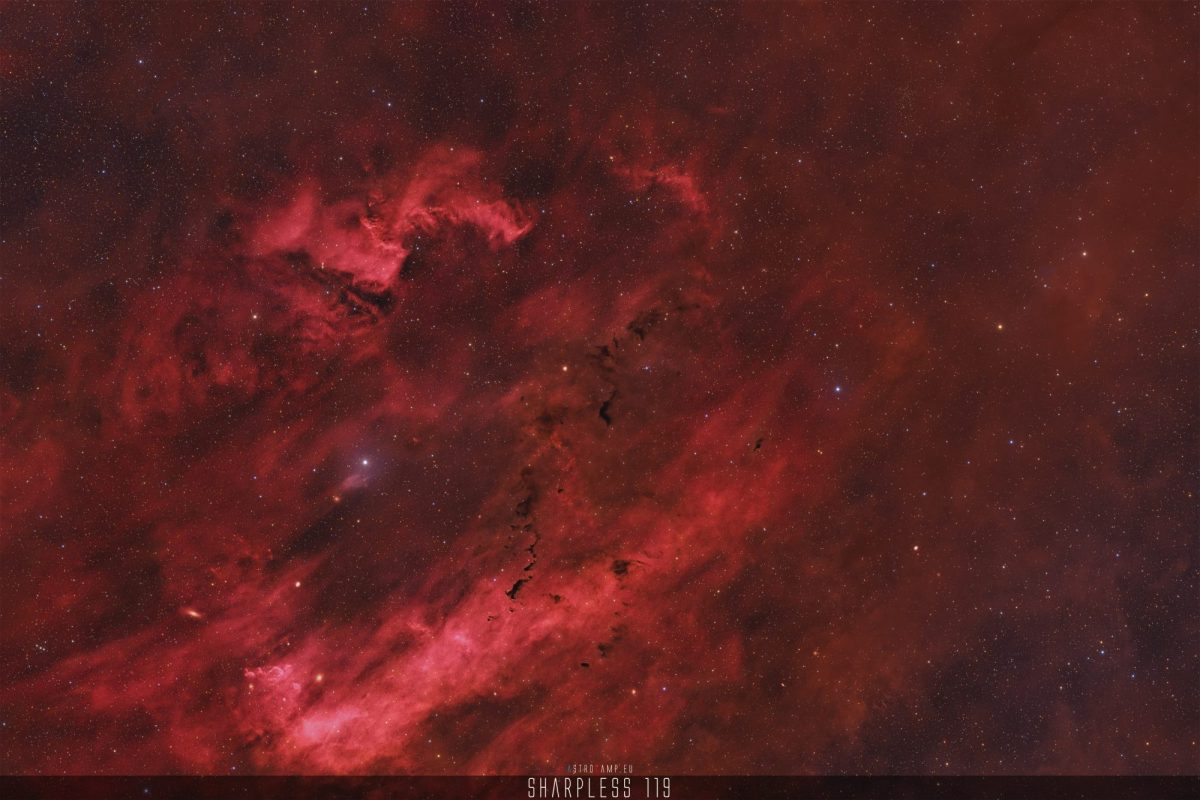
Sh2-119 is an emission nebula in the constellation Cygnus that reaches its annual culmination at astronomical midnight and is best observed mid August.

The Sun is the brightest and most impressive object in the daytime sky. In astrophotography, its dynamic surface, sunspots, faculae and, with suitable filters, fine chromospheric structures can be revealed.

The Moon is one of the most fascinating and accessible targets in astrophotography. Its craters, mountains, valleys and shadows change their appearance with every lunar phase. Along the boundary between day and night, shallow sunlight creates striking contrasts and reveals an exceptional amount of detail.

Venus is one of the most striking targets in planetary astrophotography and can be seen as either the Morning Star or the Evening Star, depending on its position in its orbit.

Mars is a fascinating target for astrophotography, revealing surface features, polar caps and atmospheric details under favorable conditions. With a long focal length, video capture and lucky imaging, thousands of individual frames can be combined to produce remarkably detailed images of the Red Planet.

Jupiter is fascinating not only because of its impressive atmosphere, but also because of its four large Galilean moons. Io, Europa, Ganymede and Callisto appear as tiny points of light around the planet and constantly change their positions from night to night.

Saturn is one of the most distinctive targets in planetary astrophotography. Its characteristic ring system makes it an extraordinary subject.