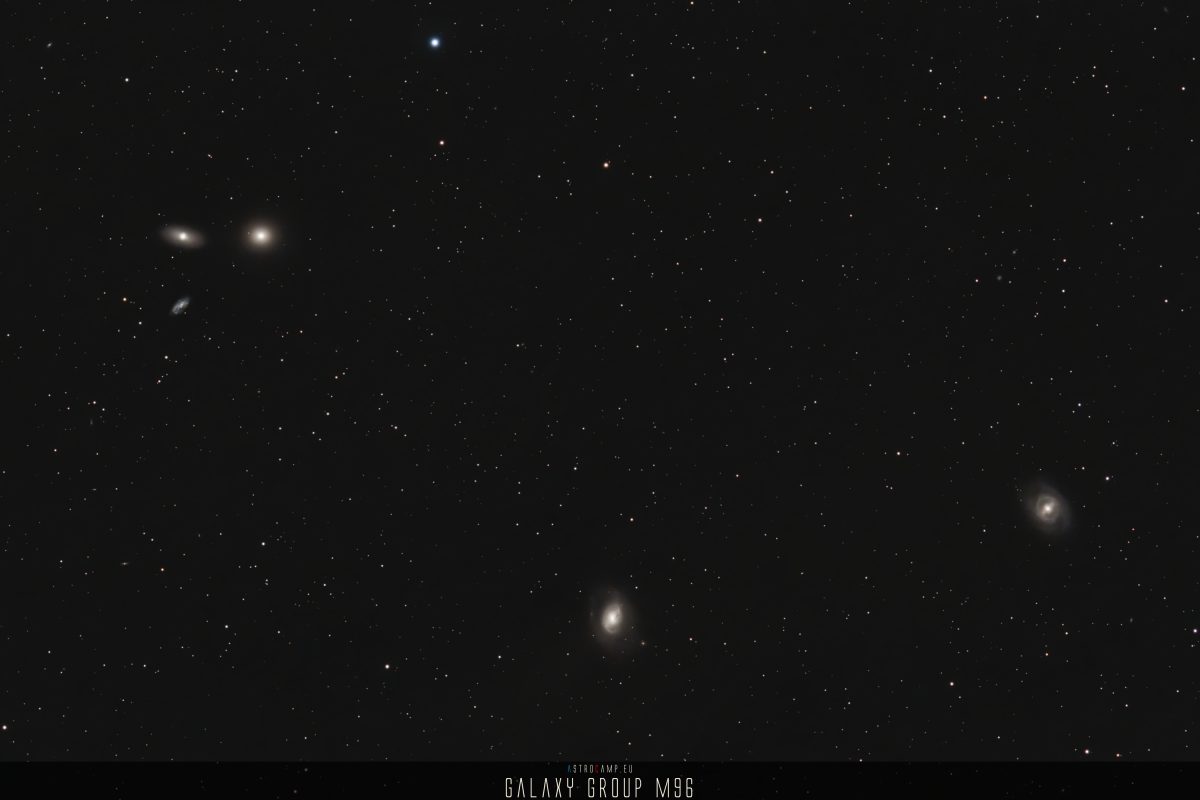
A group of 5 galaxies. The frames were shot with an EOS M100(a) at a 600mm refractor telescope in march 2022. Reprocessed 01/2024.
 Astronomy and Astrophotography
A group of 5 galaxies. The frames were shot with an EOS M100(a) at a 600mm refractor telescope in march 2022. Reprocessed 01/2024.
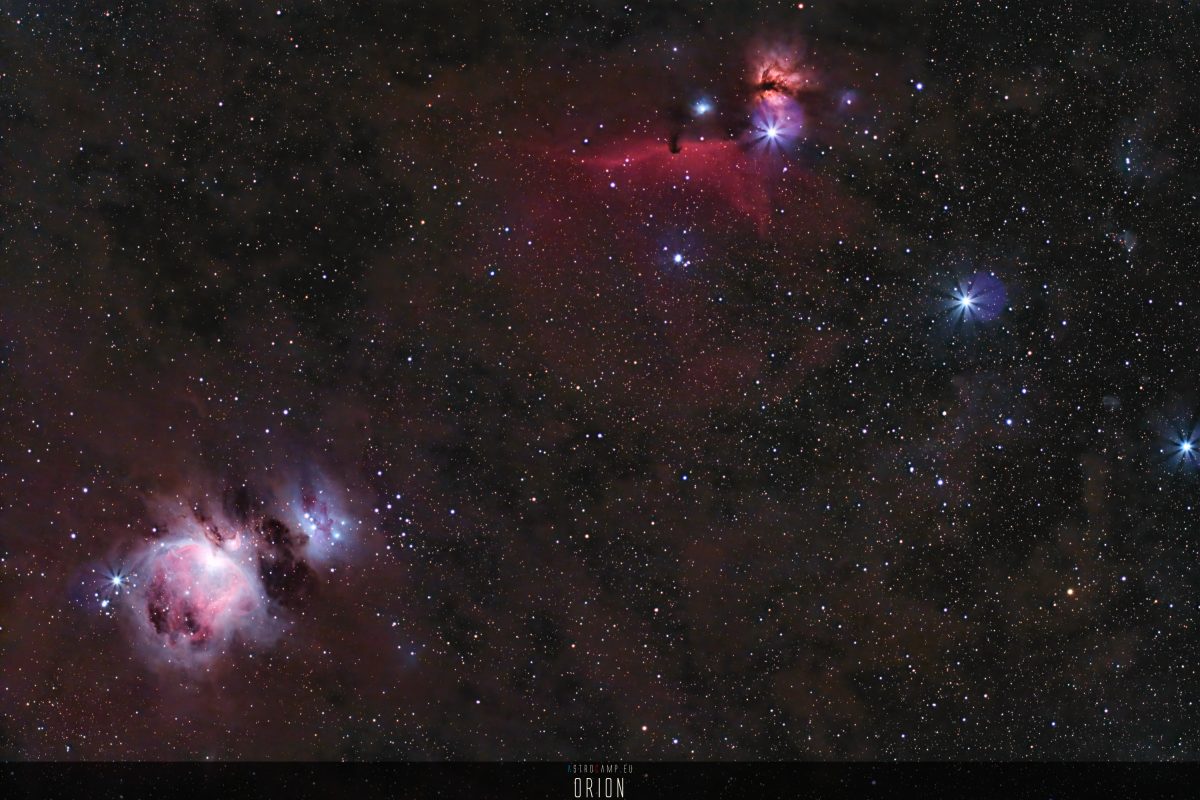
Legacy Lens from the 1970th meets my new workflow in 2024. The reprocessed version of the Orion region.
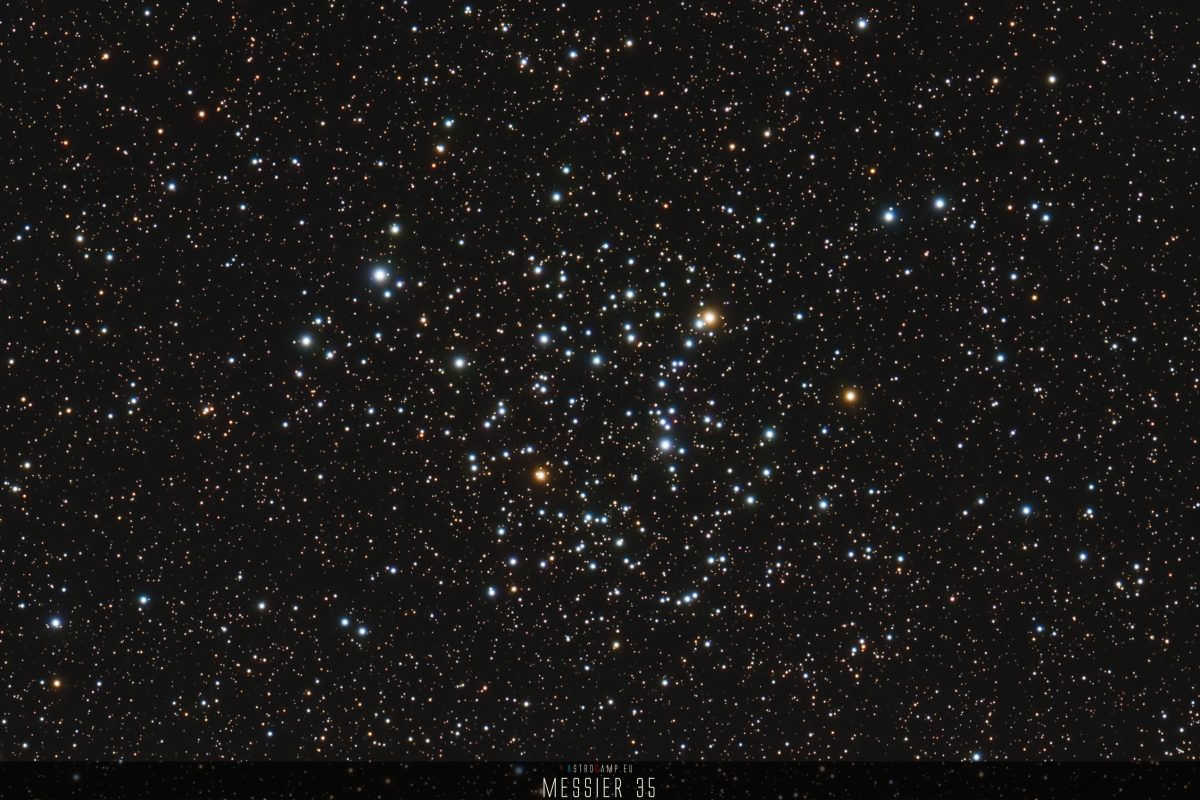
Messier 35 is a large open star cluster located in the constellation Gemini, approximately 2,800 light-years away from Earth, reaching its annual culmination at astronomical midnight around end-December.
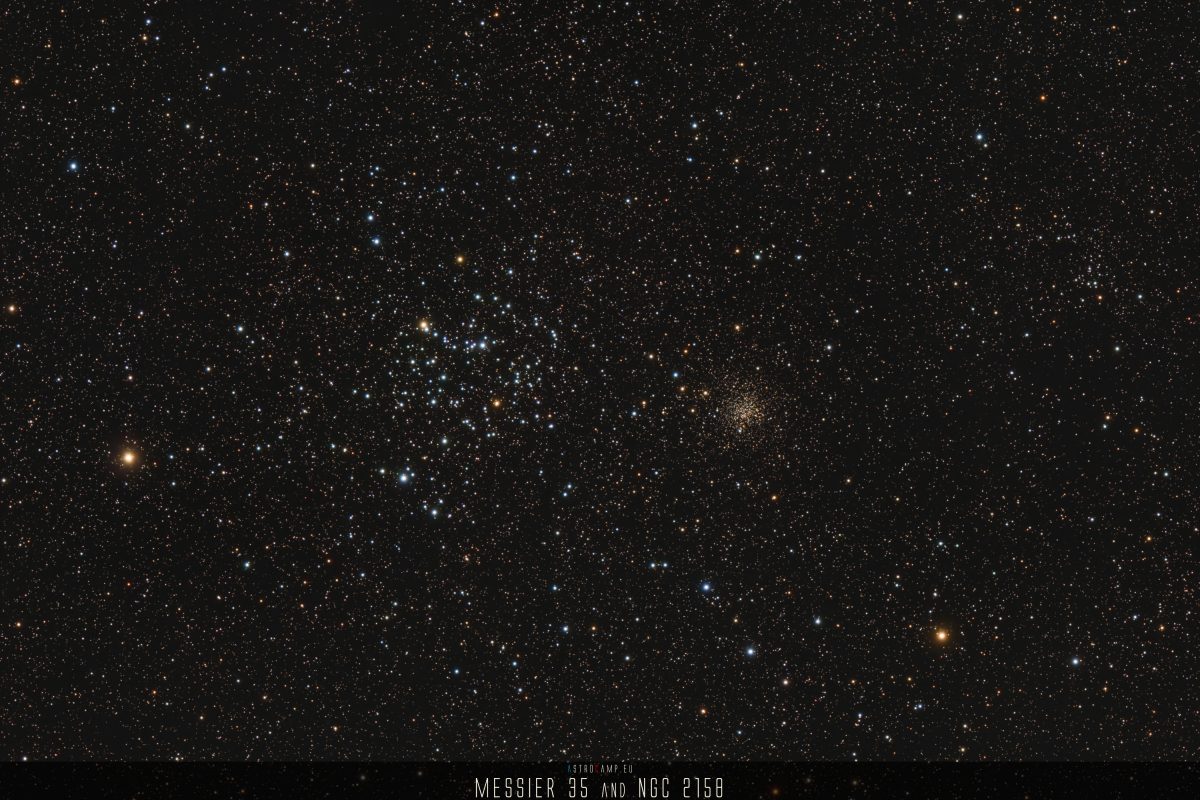
My 2024 reprocessed astrophoto of the open clusters Messier 35 and NGC 2158. I collected the data in early 2022.

I just re-processed my November-Data. My first Galaxy-Photo with DSLR OSC with H-Alpha Layer.

Messier 39 is a bright open star cluster located in the constellation Cygnus, about 800 to 1,010 light-years away from Earth, and it reaches its annual culmination at astronomical midnight and is best observed in mid August.
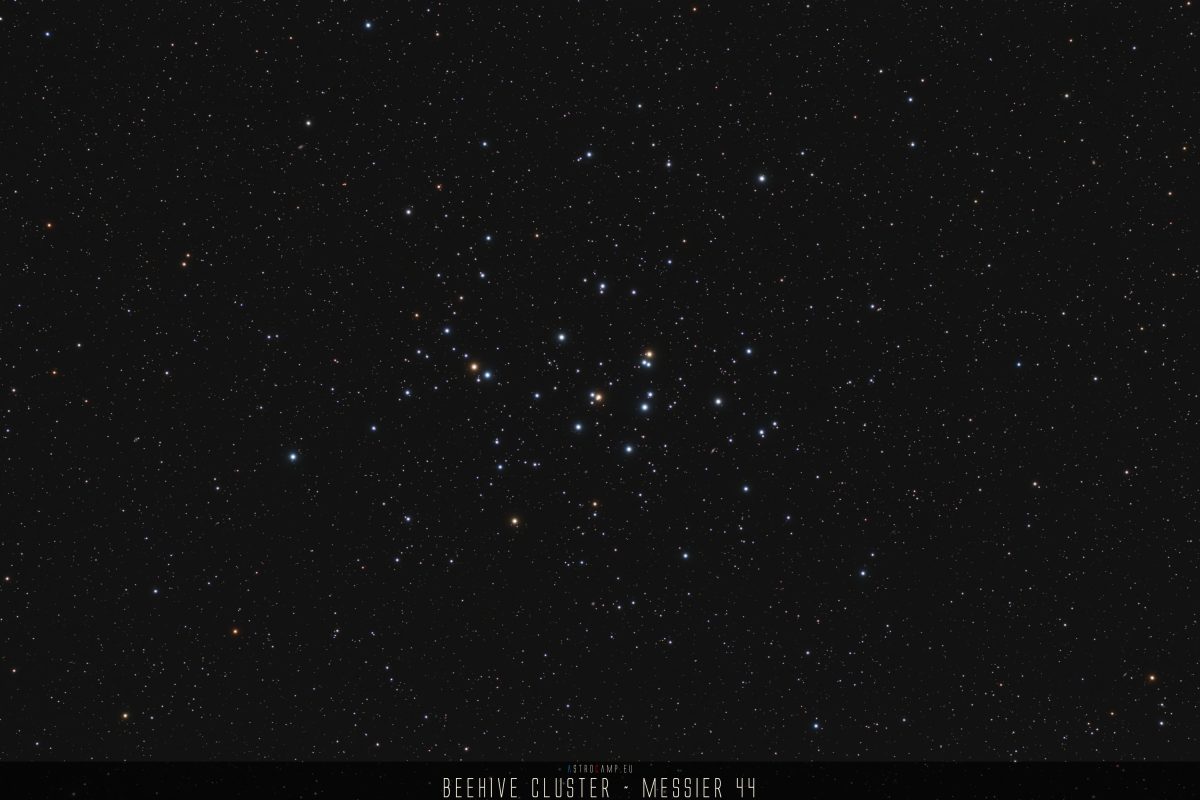
Messier 44, also known as the Beehive Cluster, is an open star cluster located in the constellation Cancer, approximately 610 light-years away from Earth. The cluster reaches its annual culmination at astronomical midnight around late January.

Messier 81 is a grand design spiral galaxy in the constellation Ursa Major, located about 12 millionly away. It reaches its annual culmination at astronomical midnight around mid-February.

M82, also known as the Cigar Galaxy, is a starburst galaxy located in the constellation Ursa Major, approximately 12 million light-years away from Earth. This galaxy reaches its annual culmination at astronomical midnight around mid-February.
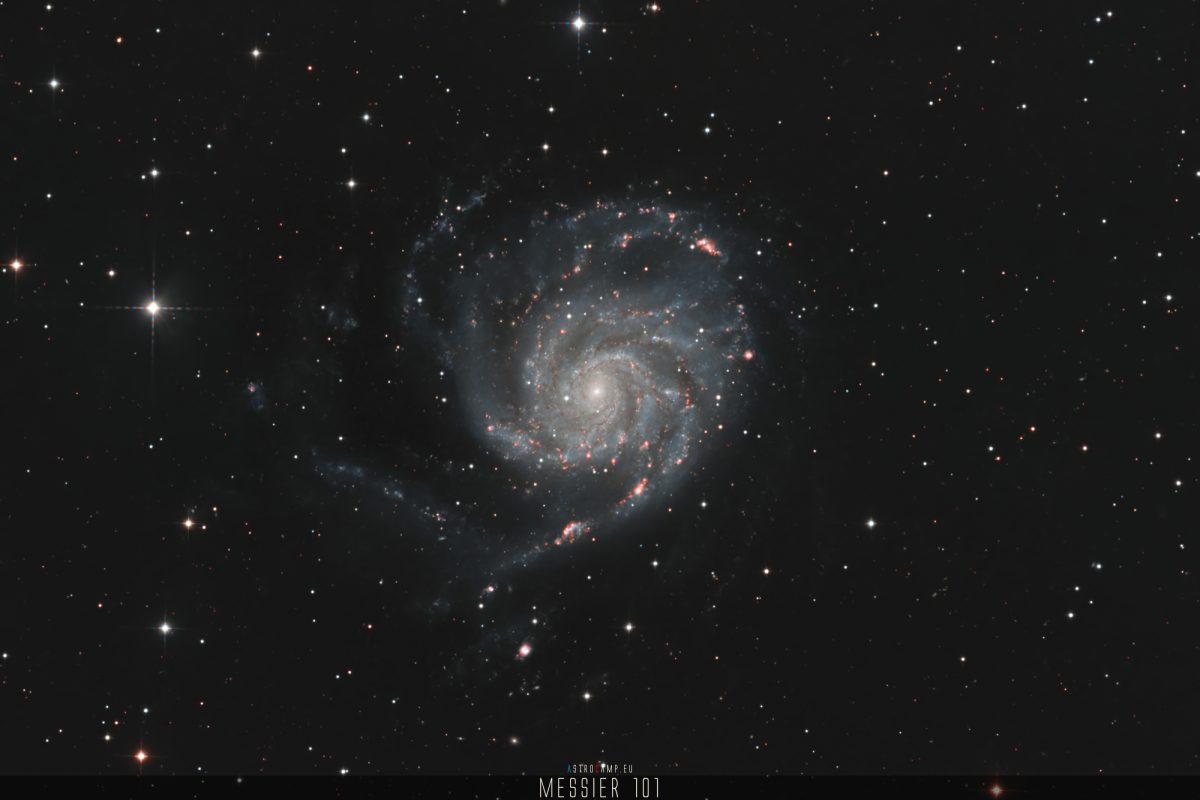
Messier 101, also known as the Pinwheel Galaxy, is a large face-on spiral galaxy in the constellation Ursa Major about 21 million light-years from Earth, reaches its annual culmination at astronomical midnight and is best observed in late April.