Caldwell 37 (C37) with the VC200L: one night in July 2026, 1 h 40 min. Location: Koblenz.

 Astrocamp – Astrophotography & Deep-Sky Catalog
Caldwell 37 (C37) with the VC200L: one night in July 2026, 1 h 40 min. Location: Koblenz.
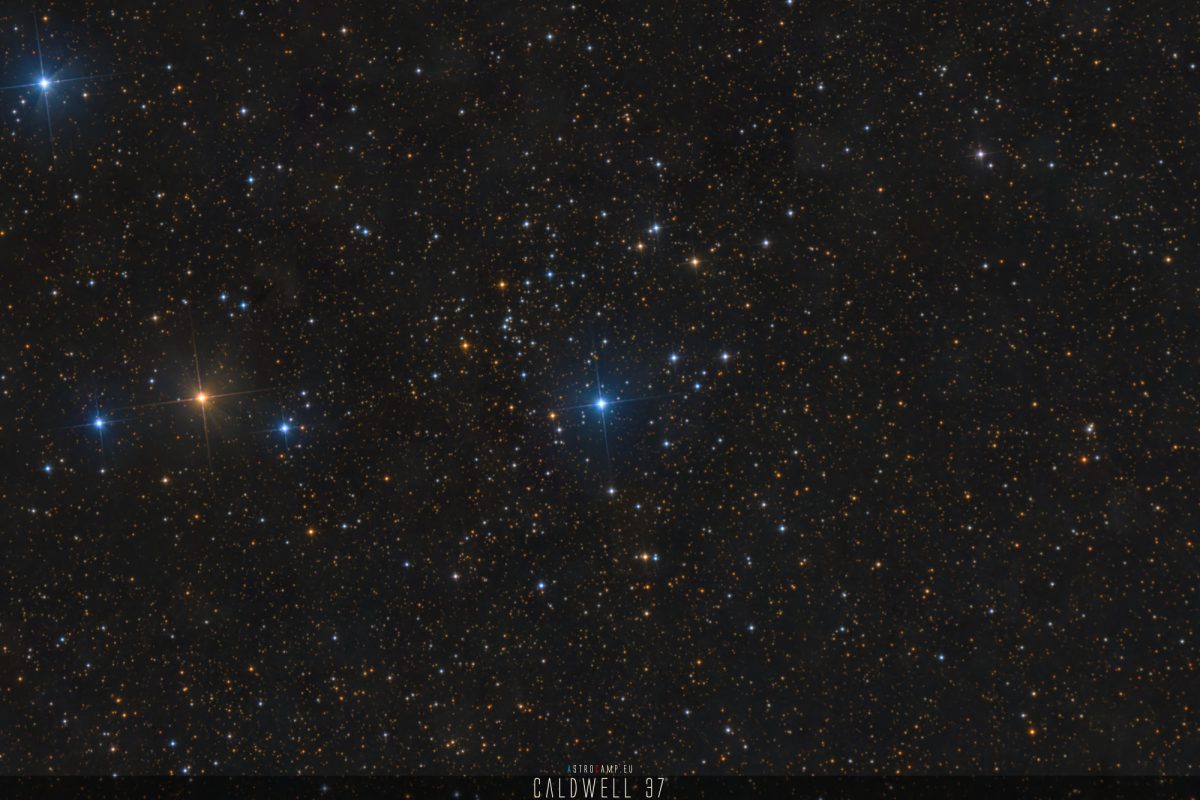
C 37 is an open star cluster in the constellation Vulpecula, lying about 4,740 light-years away, and reaches its annual culmination at astronomical midnight and is best observed late July.

The last photo before I officially kick off the new galaxy season and switch telescope (and camera).

I photographed the Rosette Nebula again after five years. Several attempts, incorrect framing, discarded color channels, and unfavorable lighting conditions turned the project into an adventure.

My final project of 2025. I also used an exciting combination of technologies here. A successful test for the future?

The Dragonfly Cluster is an open star cluster in the constellation Cassiopeia, located roughly 7,920 light-years away, and reaches its annual culmination at astronomical midnight and is best observed mid October.

A single, crystal-clear evening. I felt like taking out my VC200L with the reducer and capturing another Caldwell object that was still missing from my collection.

C 28 is an open star cluster in the constellation Andromeda, located about 1,490 light-years away, and reaches its annual culmination at astronomical midnight and is best observed late October.

NGC 7082 is an open star cluster in the constellation Cygnus, lying about 4,700 light-years away, and reaches its annual culmination at astronomical midnight and is best observed mid August.

NGC 7062 is an open star cluster in the constellation Cygnus, located about 5,220 light-years away, and reaches its annual culmination at astronomical midnight and is best observed mid August.