
Supernova remnants are the glowing debris of immense stellar explosions. When a massive star is torn apart as a supernova at the end of its life, or a white dwarf perishes in a thermonuclear blast, it hurls its material into space at thousands of kilometres per second. Over thousands of years these shells expand, making the surrounding gas glow and forming delicate, filamentary structures. The Veil Nebula in Cygnus is perhaps the best-known example and a classic narrowband target. Oxygen often appears in soft blue-green and hydrogen in deep red. Photographically, supernova remnants are demanding: they are extended, faint, and reveal their delicate structure only in long narrowband exposures under dark skies. That is exactly what makes them such rewarding, striking targets. This page gathers every supernova remnant I have photographed so far. Click into any object to learn more about it and see all the astrophoto posts it appears in.

The Eastern Veil Nebula is a supernova remnant in the constellation Cygnus that reaches its annual culmination at astronomical midnight and is best observed early August.

The Western Veil Nebula is a supernova remnant in the constellation Cygnus, and it reaches its annual culmination at astronomical midnight and is best observed early August.
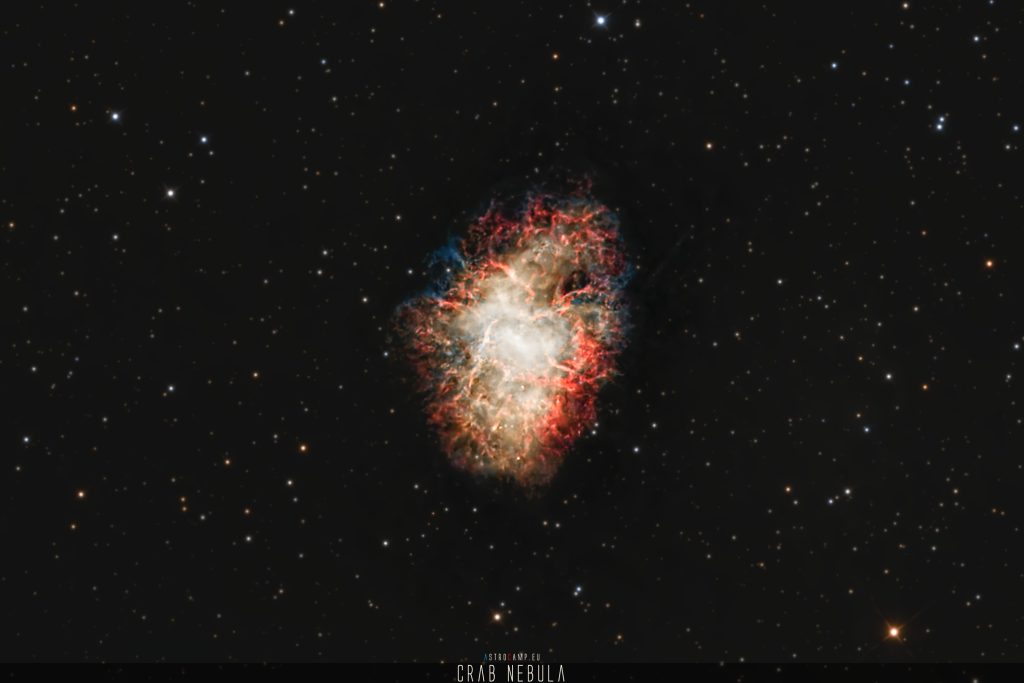
The Crab Nebula is a supernova remnant in the constellation Taurus, located about 6,520 light-years away, and reaches its annual culmination at astronomical midnight and is best observed mid December.

The Bat Nebula (NGC 6995) is a supernova remnant in the constellation Cygnus that reaches its annual culmination at astronomical midnight and is best observed early August.


