Captured M53 in Coma Berenices—58,000 light-years away. A dense globular cluster, imaged from home.

 Astrocamp – Astrophotography & Deep-Sky Catalog
Captured M53 in Coma Berenices—58,000 light-years away. A dense globular cluster, imaged from home.

Messier 71, a loosely concentrated globular cluster in the constellation Sagitta about 12,000 to 13,000 light-years from Earth, reaches its annual culmination at astronomical midnight and is best observed mid July.

Messier 56, a globular cluster in the constellation Lyra located about 32,900 to 33,000 light-years from Earth, reaches its annual culmination at astronomical midnight and is best observed in early July.

Messier 5 is a bright and rich globular cluster in the constellation Serpens, approximately 24,500 light-years from Earth, and reaches its annual culmination at astronomical midnight and is best observed in mid May.

Messier 92, a bright and compact globular cluster in the constellation Hercules located about 26,700 to 27,000 light-years from Earth, reaches its annual culmination at astronomical midnight and is best observed in early June.

My astrophoto of the rather rarely photographed globular cluster in the constellation Hercules: Messier 92. Now new: with session analysis!

Messier 3 is a bright globular cluster in the constellation Canes Venatici, approximately 34,000 light-years from Earth, and reaches its annual culmination at astronomical midnight and is best observed in mid April.
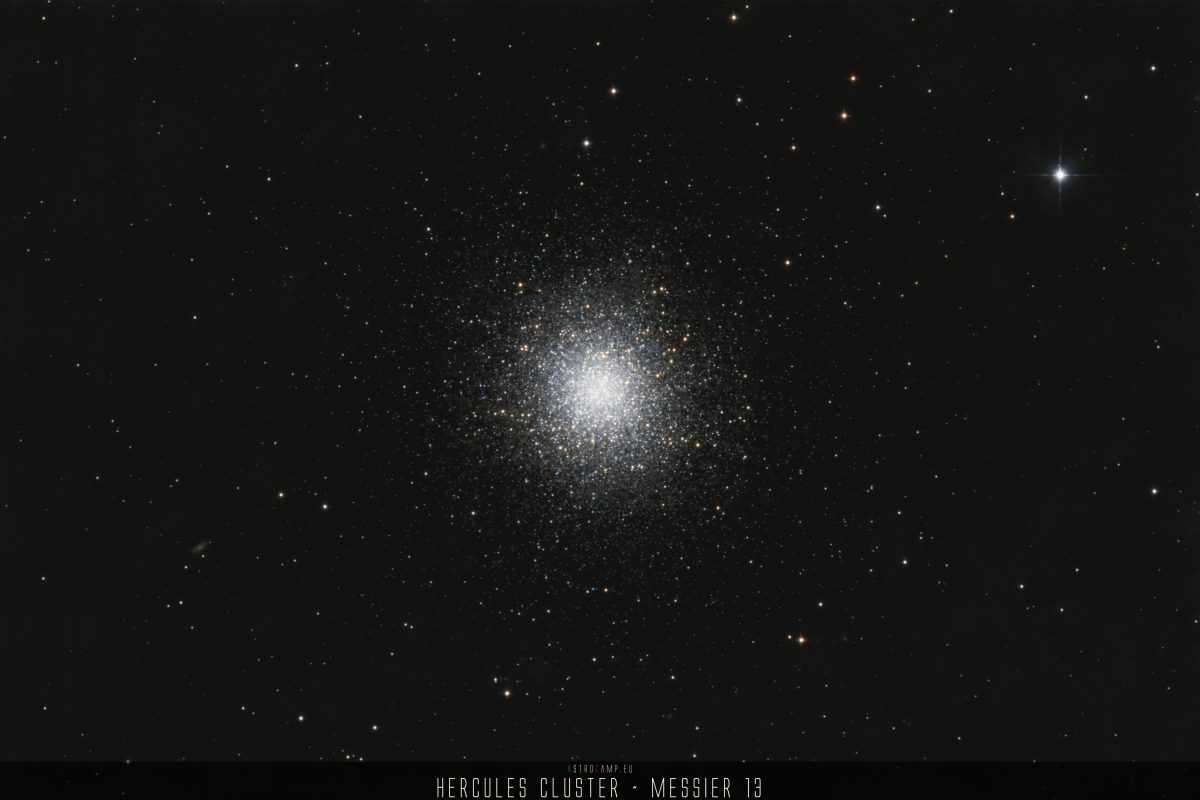
Clearly rounder and less inflated stars. The development of the new material from last summer has paid off.
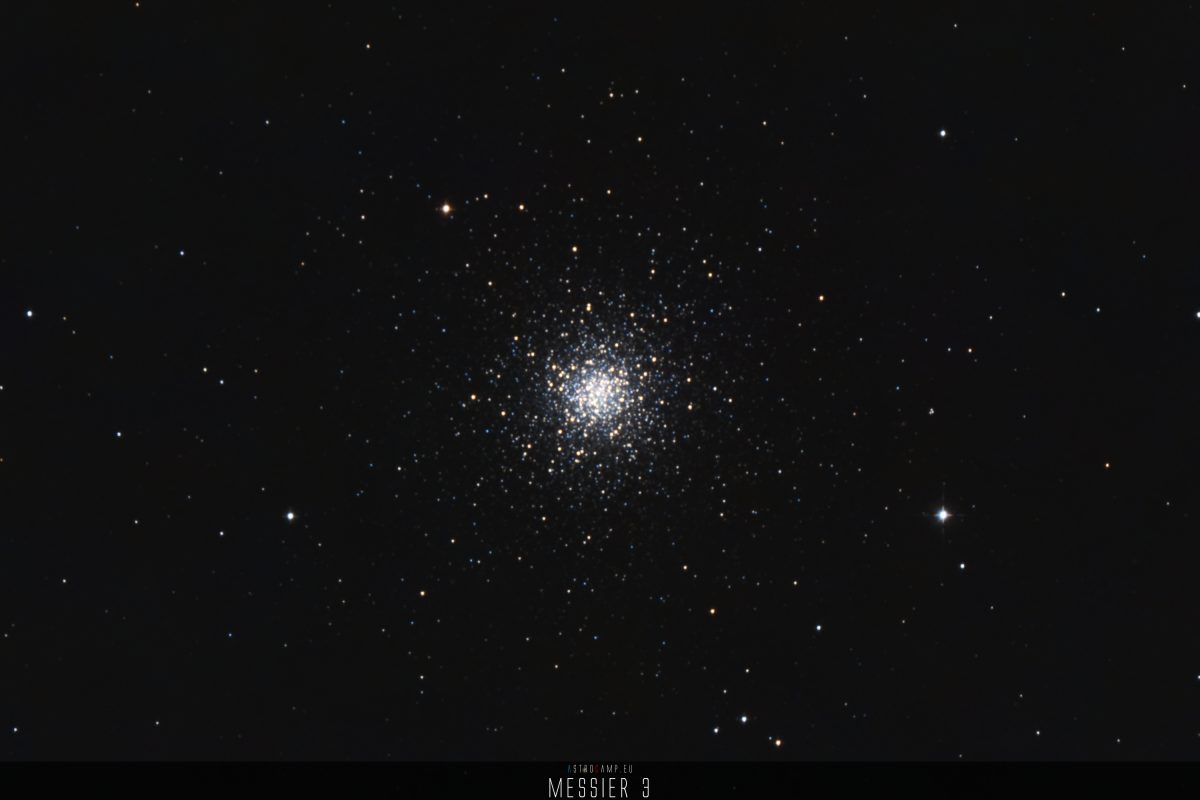
Messier 3 – One of the bright globular clusters in spring. Here a one-hour-integration with my VISAC astrograph.

Messier 53 is a globular star cluster located in the constellation Coma Berenices, about 58,000 light-years from Earth, and reaches its annual culmination at astronomical midnight and is best observed in mid April.