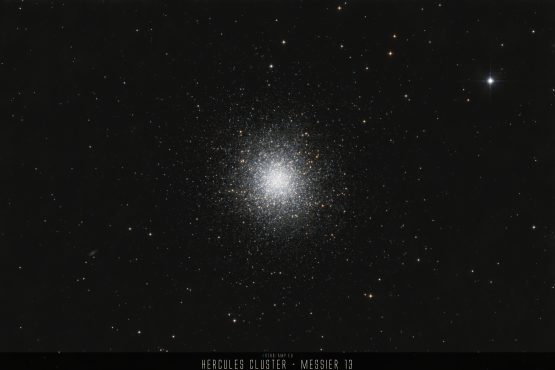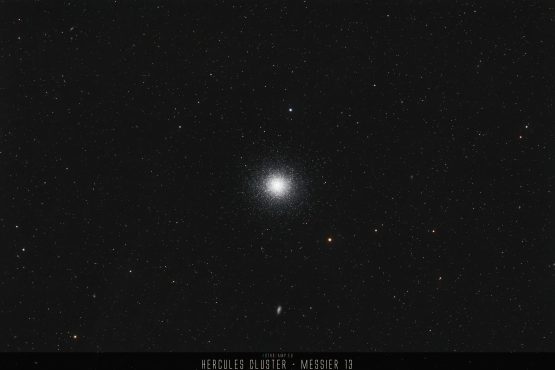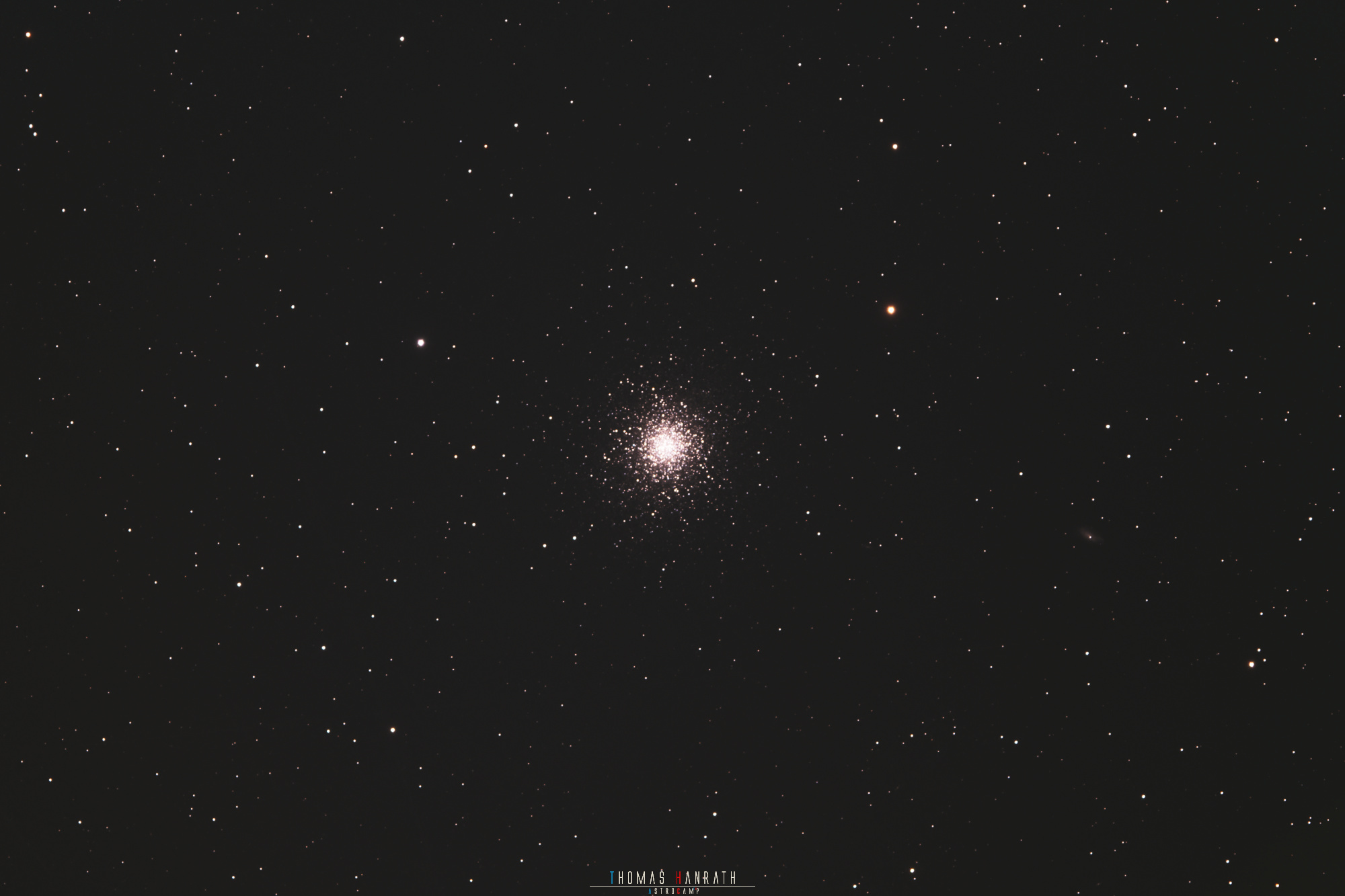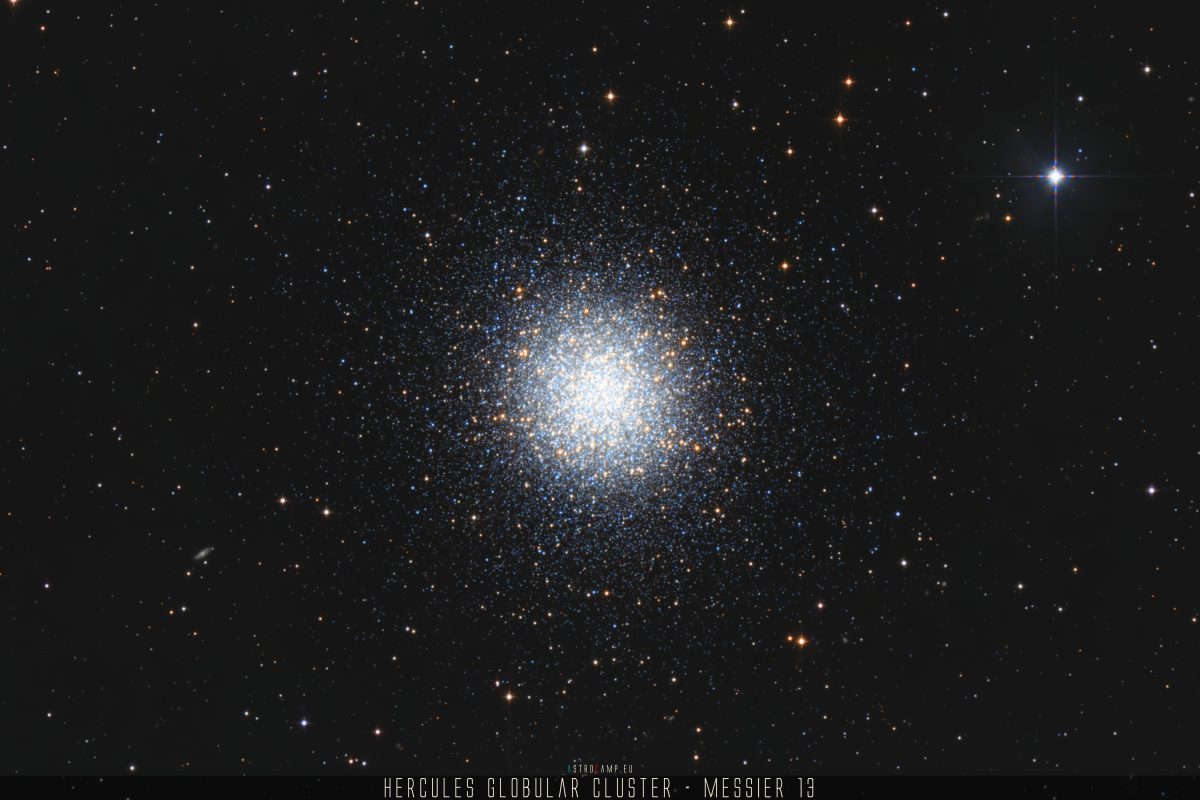
Messier 13 is one of the brightest and most celebrated globular clusters visible from the Northern Hemisphere, containing several hundred thousand stars tightly packed into a spherical region. Discovered by Edmond Halley in 1714 and cataloged by Charles Messier in 1764, it stands out for its rich star population and impressive visual appearance through telescopes. The cluster spans about 20 arcminutes in the sky, equivalent to a linear diameter of roughly 145–168 light-years. Its dense core and sparkling stars make it a favorite target for amateur and professional astrophotographers alike.
Names and Catalog numbers
- The Great Globular Cluster in Hercules
- The Hercules Globular Cluster
- The Great Hercules Cluster
- Messier 13 (M13)
- NGC 6205
- Melotte 150
Position and the cosmic neighborhood
Messier 13 is situated within the Keystone asterism of Hercules, about two-thirds of the way from the star Zeta Herculis to Eta Herculis. It is easily located between the bright stars Vega and Arcturus, making it a convenient target during spring and summer nights in the Northern Hemisphere. The cluster is accompanied in its cosmic neighborhood by the edge-on galaxy NGC 6207, just 28 arcminutes to the northeast, and the small galaxy IC 4617, which lies between M13 and NGC 6207. The region is rich in deep-sky objects, offering astrophotographers additional targets near the cluster.
Nice to Know
- Messier 13 is one of the largest and brightest globular clusters in the northern sky, containing between 100,000 and 600,000 stars.
- The cluster is notable for its population of blue straggler stars, which appear younger and more massive due to stellar interactions and mergers.
- M13’s dense core has a stellar density about 100 times greater than the solar neighborhood, creating a spectacular view for any hypothetical observer within the cluster.
- It is a favorite astrophotography target, with even small telescopes revealing its granular structure, while larger apertures can resolve individual stars deep into the core.
Brightnes, distance and size
Messier 13 shines at an apparent magnitude of about 5.8, making it visible to the naked eye under dark skies and easily observable with binoculars or small telescopes. Its distance from Earth is estimated between 22,000 and 25,100 light-years, and it spans approximately 145 to 168 light-years in diameter. The cluster covers about 20 arcminutes of the sky, roughly two-thirds the apparent diameter of the full Moon, providing a striking and detailed target for astrophotographers.