
 2 posts · ♥ 29 · ↻ 14 in total
 2 posts · ♥ 39 · ↻ 0 in total
 2 posts · ♥ 10 · ↻ 1 in total
Every month has its own page with the deep-sky objects that stand highest at midnight. It adds the moon-free nights for broadband, the narrowband windows around full moon, meteor showers, planets, constellations and lunar occultations. The current and next month come first; the number on each tile is the count of framings for that month.
The night sky month by month
 This month
November 2026
16 framings
Object of the month Messier 45 – Pleiades
C 41 · Hyades · C 5 · Hidden Galaxy · M 34
 Next month
December 2026
20 framings
Object of the month Messier 42 – Orion Nebula
B 33 · Horsehead Nebula · C 31 · Flaming Star Nebula · C 41 · Hyades

January 2027
7 framings
Object of the month M 67
C 25 · Intergalactic Wanderer · C 7 · LBN 729, LBN 728
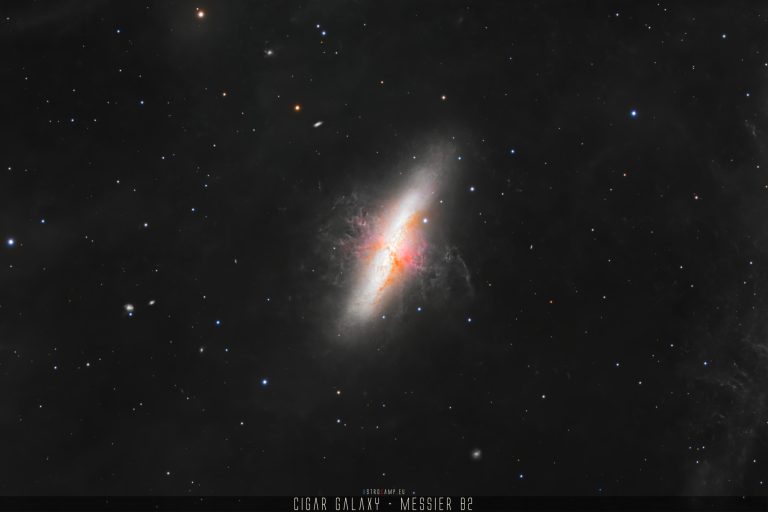
February 2027
8 framings
Object of the month M 82 · Cigar Galaxy
Leo I Group M96 · Leo-I-Gruppe · Leo I Group · M 67

March 2027
17 framings
Object of the month M 97 · Owl Nebula
C 3 · C 38 · Needle Galaxy · Leo I Group M96

April 2027
8 framings
Object of the month M 101 · Pinwheel Galaxy
C 38 · Needle Galaxy · M 101 · Pinwheel Galaxy · M 3

May 2027
11 framings
Object of the month M 5
ACO 2151 · Hercules Cluster · M 13 · Hercules Globular Cluster · M 5
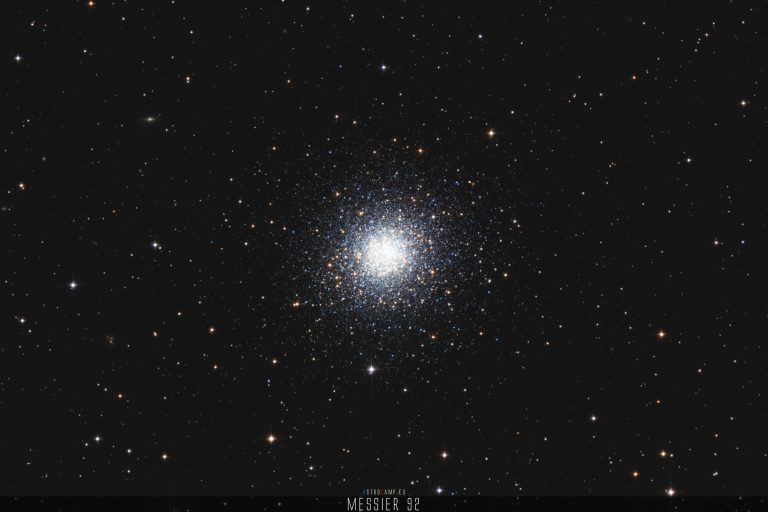
June 2027
19 framings
Object of the month M 92
M 13 · Hercules Globular Cluster · M 16 · Eagle Nebula · M 92

July 2027
35 framings
Object of the month vdB 131
C 12 · Fireworks Galaxy · C 20 · North America Nebula · C 27 · Crescent Nebula

August 2027
27 framings
Object of the month Sh2-103 · Cygnus Loop
C 16 · C 20 · North America Nebula · C 33 · Eastern Veil Nebula

September 2027
19 framings
Object of the month Sh2-142 · Wizard Nebula
Sh2-142 · Wizard Nebula · Wizard Nebula Wide Field · A66 84

October 2027
22 framings
Object of the month Messier 31 – Andromeda Galaxy
C 10 · C 13 · Dragonfly Cluster · C 28
What each monthly page shows
- Moon windows: the nights around new moon for broadband (LRGB, one-shot colour) and the weeks around full moon when narrowband (Hα, OIII, SII) still works well.
- Dark hours per night: how long the sky is astronomically dark and how much of it is moon-free.
- Star chart with framings: the midnight sky with the frame of every target, to scale for real telescopes, lenses and cameras.
- Deep-sky targets by object type: galaxies, nebulae and star clusters with focal-length class, difficulty, a narrowband hint and a link to the object page.
- Planets, constellations, occultations and meteors: what else happens in the sky that month.
How targets are chosen
An object is listed in the month in which it stands highest at astronomical midnight – as long as it stays above the minimum altitude for at least two hours of dark sky. That way every target appears when it is well placed for most of the night; if its peak falls at the turn of a month, it shows up in the neighbouring month too. The framings come from Astrocamp’s imaging plans: real combinations of optics and camera. Targets already photographed show the image.
Which location the pages are calculated for
The monthly pages are calculated for 41° N (New York area). You can pick a different location in the star chart. The pages stay valid year after year: month and year move on to the next date by themselves, and moon phases, planets and events are recalculated.
Frequently asked questions
H3: What can I see in the night sky tonight? The sky preview on this page shows the sky for your location, your open patch of sky and your observing time. The monthly pages are meant for planning weeks and months ahead.
H3: When is the best time for deep-sky astrophotography? On the nights around new moon, when the moon is below the horizon. Emission nebulae can be imaged with narrowband filters even under a bright moon. The longest dark nights run from October to February.
H3: Which deep-sky objects are good for beginners? Bright star clusters and large nebulae and galaxies such as the Pleiades M 45, the Orion Nebula M 42 or the Andromeda Galaxy M 31. On the monthly pages every target carries a difficulty – easy, medium or challenging – and a focal-length class.
Plan further
The visibility planner shows when a particular object is best placed. All objects with data and images are in the object database and the deep-sky catalogs such as Messier and Caldwell; the planetarium shows Astrocamp’s own images in the sky.
First time I’ve looked at your Night Sky—very nice.
After some issues with my little telescope I’ve been honing my skills imaging the Heart Nebula. It travels happily through the swath of sky that’s free of obstructions.
Excellent information. Thanks.🙏
Thank you very much.