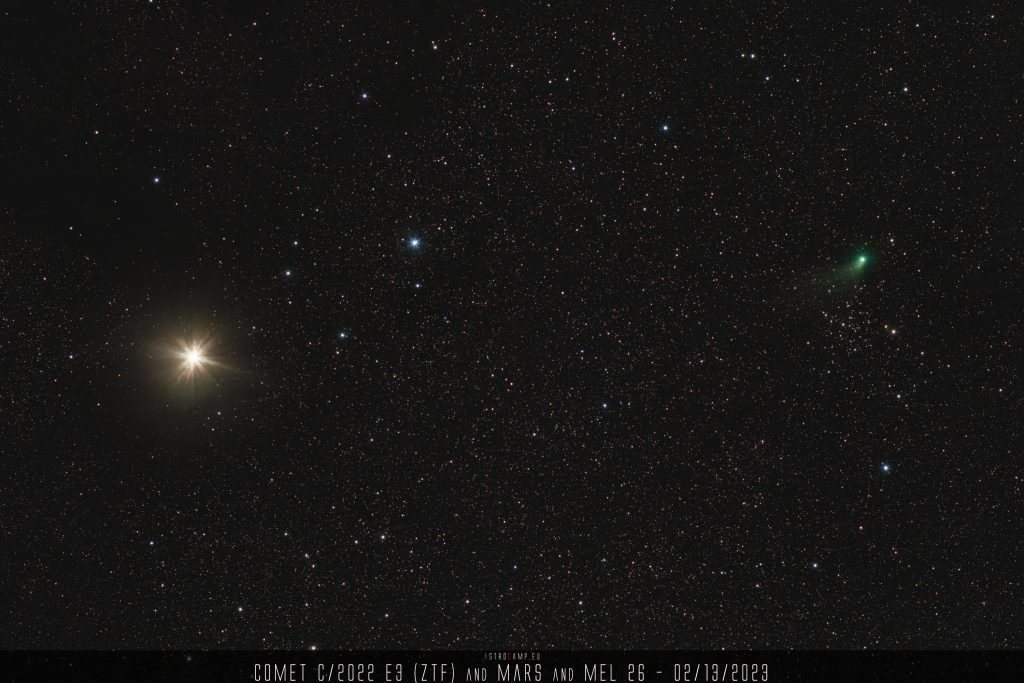
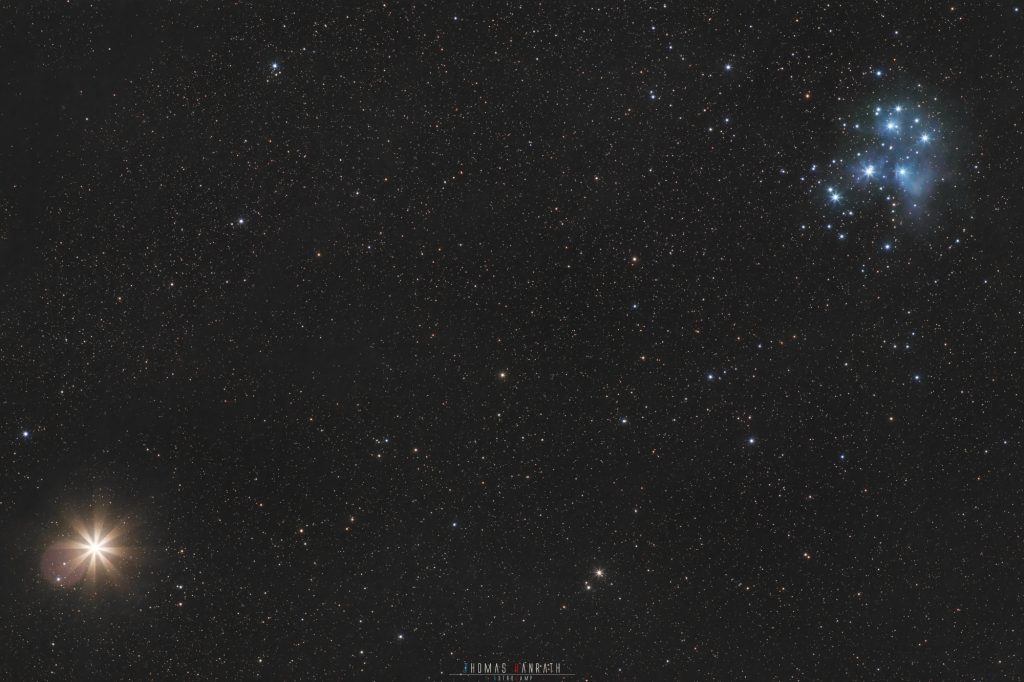
Mars is one of the most fascinating planets to capture in astrophotography. Its distinctive reddish color is caused by iron-rich dust on the surface, making it an instantly recognizable target even through a telescope.
For high-resolution planetary imaging, the subtle details on Mars are particularly interesting. Dark albedo features, bright polar caps and, under favorable conditions, clouds and atmospheric structures can be captured with a telescope and planetary camera. Because Mars appears relatively small in the sky, a long focal length, precise focusing and steady atmospheric conditions are especially important.
Mars images are typically not created as single long exposures, but from video recordings containing thousands of individual frames. Using lucky imaging techniques, the sharpest frames are selected and stacked to reduce the effects of atmospheric turbulence. This makes it possible to take advantage of brief moments of steady seeing and reveal surprisingly fine details on the Martian surface.