

Wie gefällt dir dieses Bild?



Ich habe mich in letzter Zeit deutlich intensiver um das Lucky Imaging und insbesondere die Planetenfotografie gekümmert.
Ich habe über die letzten Jahre immer wieder Planeten fotografiert, aber Experte bin ich darin bisher nicht.
Meine letzen Verbesserungen, die ich jetzt am Saturn ausprobieren konnte, sind die deutlich erhöhte Framerate meiner Kamera und der Luminanzkanal auf Infrarot-Basis.
Den Unterschied kann man definitiv sehen. Ich betrachte diese Jupiter-Runde zur Opposition als weiteren deutlichen Fortschritt – aber wie das so ist, ich bin sicher, dass das noch besser geht. Zumal es deutlich bessere Planetenfotos in der Community gibt.
Hochauflösend auf Astrobin:

Sitzungsdetails
| Teleskop | Vixen VC200L |
|---|---|
| Korrekturlinse | Tele Vue Powermate 2.5x |
| Errechnete Brennweite | 4500 mm |
| Kamera | QHY 5-III-462C |
| Filter | QHY UV/IR Cut QHY IR-Pass 850nm |
| Montierung | WarpAstron WD-20P Berlebach UNI18 ASTRO |
| Aufnahmedatum | 04.10.2026 |
| ROI | 400×400 |
| Bildrate | 140,00 fps |
| Verwendete Frames | QHY UV/IR Cut: 1.000 von 10.000 QHY IR-Pass 850nm: 1.000 von 10.000 |
| Kalibrierungsframes | – |
| Empfindlichkeit | GAIN 500 |
| Aufnahmetechnik | Macbook Air M1, Firecapture |
| Entwicklungsdatum | 05.10.2026 |
| Software Stack | Affinity, AutoStakkert, Registax |
| Aufnahmeort | Koblenz, Rheinland |
| Öffnungsverhältnis | f/22,5 |


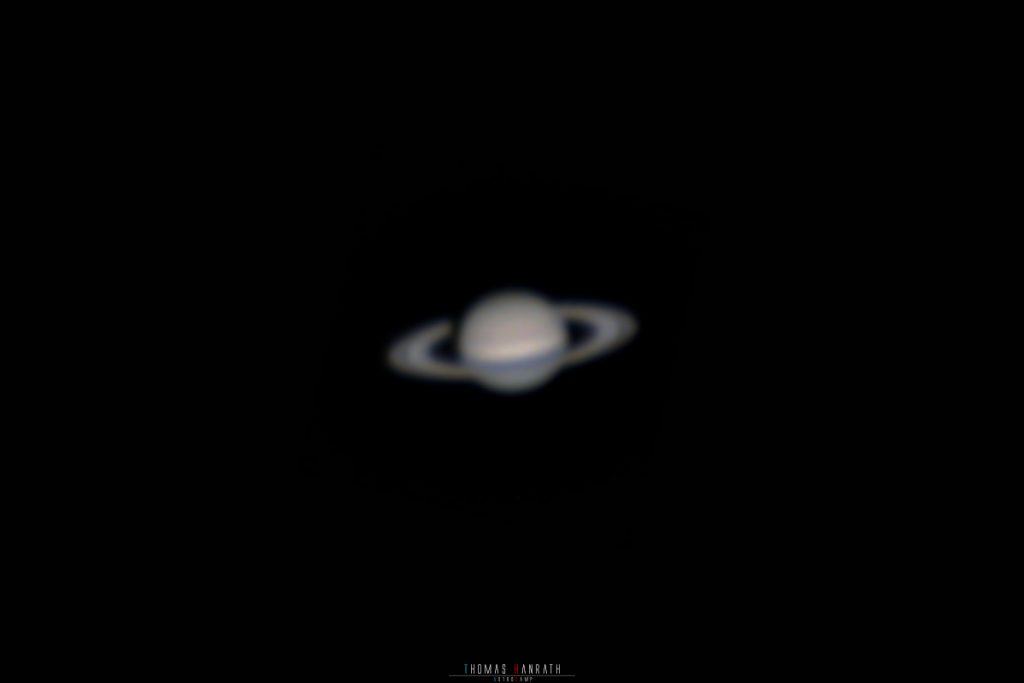
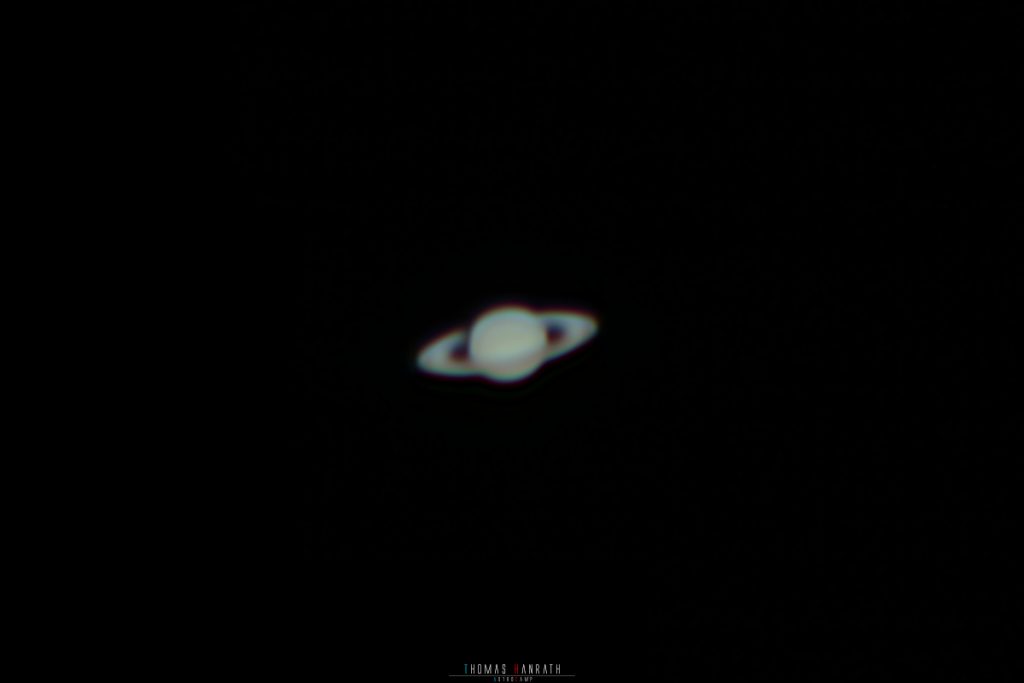

Uh do we already have this much angle to the rings, nice. Last time I looked it was basically a line.
yes, I was also very surprised 🙂
Just saw him, too through my telescope 😊
I also enjoyed Saturn visually before I used the camera. Always soo cool.
this really is so rad!
Really nice Saturn capture. What made you try infrared for this one?
just testing things out to improve my lucky imaging.
Have you noticed much difference in the detail compared with visible light?
yes, a bit.
I panned to make a comparison and a blog post about it.